
Residential & Homeowner EditionSingle-Family Home Guide
Hurricane checklist · First 72 hours after landfall
Top 5 things homeowners must doIn the 72 hours after a hurricane
The storm has passed and you’re looking at the damage to your home. What you do in the first 72 hours decides how your home, and your insurance claim, recover. These are the five things to get right.
- Years of industry experience
- 20+
- Years of industry experience
- Policyholders helped
- 15,000+
- Policyholders helped
- Recovered for our clients
- $900M+
- Recovered for our clients
- States served
- 23
- States served
The hurricane checklist
Five high-impact steps for the first 72 hours after landfall. Tap a number to tick it off as you go.
Hurricane already hit?
0 of 5 done
Hours 0–24
Get your family safe and the home secure
Your family comes first. Don’t go home until officials say it’s safe, and when you do, check for hazards before you go inside.
- Watch for downed lines, gas odors, standing water and structural damage; if in doubt, stay out
- Turn off power, gas and water if it’s safe to do so
- If you can’t stay in the home, keep every receipt for hotels, meals and other extra costs (many policies cover additional living expenses)
- Keep a simple storm log: dates, times, who you called and what they said
Watch out: Many policies pay extra living costs only for what you can prove. Start keeping receipts on day one.
Hours 0–48
Document the damage before you clean up
Photos and video are the foundation of your claim. Capture the damage exactly as you found it, before anything is torn out, cleaned or thrown away.
- Walk the home room by room with video, narrating what you see, and take date-stamped photos: wide shots and close-ups
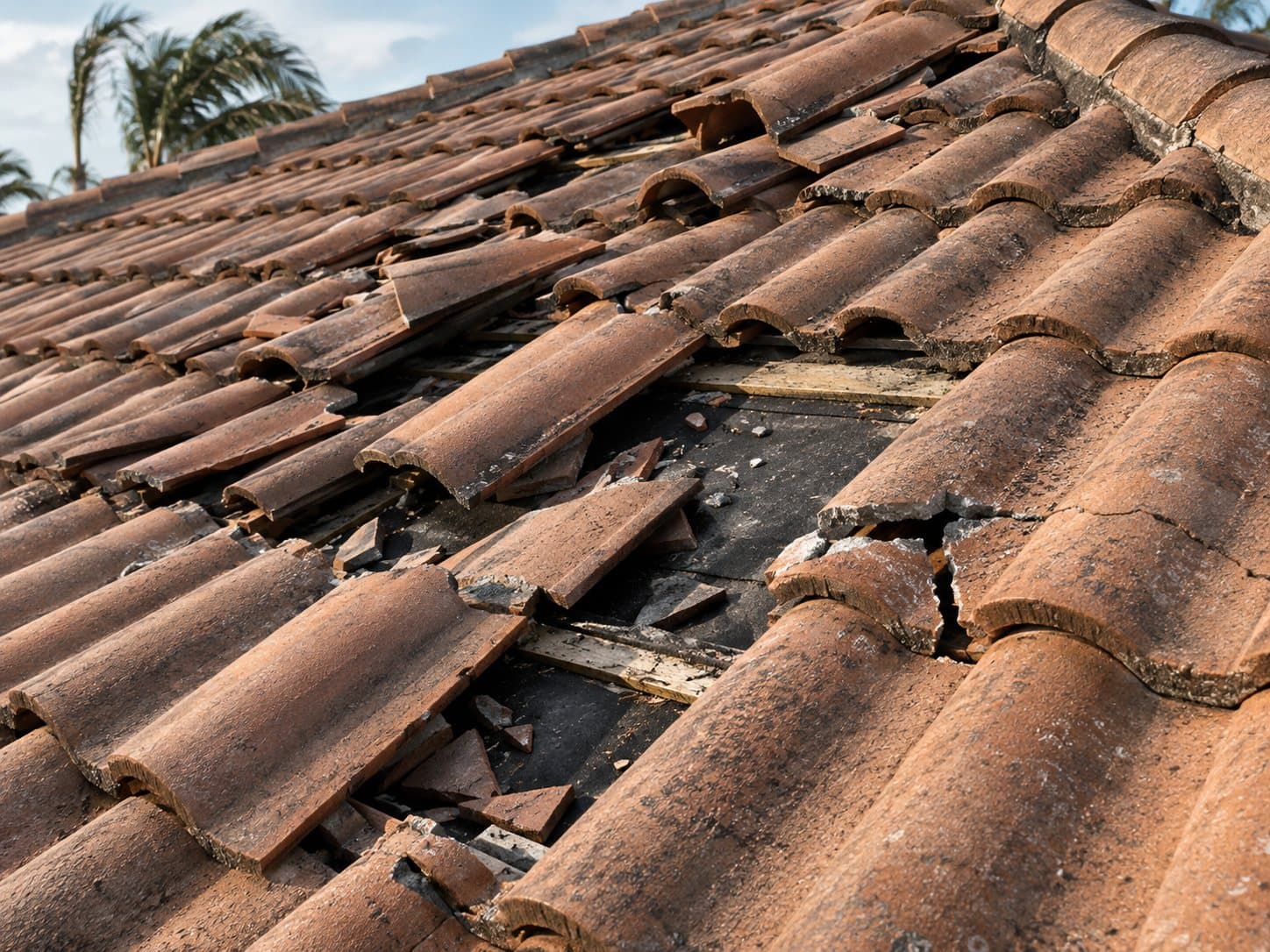
- Photograph the roof (from the ground or a drone if you can’t get up safely), siding, windows, fences, sheds and pool areas
- Measure and photograph flood water lines: wind damage and flood damage are usually covered by different policies
- List damaged belongings (what it is, brand, model, age) and photograph them before anything is thrown out
- Keep samples of damaged materials (shingles, tile, flooring) and back up every file to cloud storage
Watch out: Once it’s hauled to the curb, it’s gone. The insurance company can’t pay for damage or belongings nobody can prove were there.
Hours 0–72
Stop further damage and start drying out
Most policies require you to protect your home from further damage, and in hurricane country mold can start growing within 24 to 48 hours.
- Tarp the roof and board up broken windows and doors; keep repairs temporary for now
- Start drying out: water extraction, fans and dehumidifiers
- Get written estimates before work starts, and keep every invoice and receipt
- Photograph each area before and after emergency work
Watch out: Be careful with contractors who knock on your door after the storm. Check their license, and read anything they ask you to sign; some contracts give the contractor rights in your insurance claim.
Hours 24–72
Report the claim and know your policy
Report the damage to your insurance company promptly and in writing. Homeowners and flood are often separate policies, sometimes with different companies.
- Report to your homeowners insurer and, if you have one, your flood insurer (NFIP or private)
- Get a claim number for each policy and follow up every phone call in writing (email is fine)
- Ask for a complete copy of your policy, not just the declarations page
- Find your hurricane deductible (often a percentage of your dwelling coverage, not a flat amount)
- Note your coverages for the home, other structures, belongings and additional living expenses, and every deadline
Watch out: On the first call, stick to the facts: what happened, where and when. Avoid guessing about the cause or how bad the damage is before it has been looked at.
Before the adjuster visits
Have someone on your side at the inspection
The insurance company will send its own adjuster. That adjuster works for the insurance company. A public adjuster works for you.
- Bring in a licensed public adjuster to document the full damage, prepare your claim and negotiate it for you
- Have your public adjuster at the inspection with you to walk the adjuster through every area of damage
- Don’t accept a first offer or sign a release before the full damage is known
- Statewide reviews your claim at no upfront cost
Watch out: The first inspection often sets the tone for the whole claim. Damage that isn’t pointed out and documented that day is easy to leave out of the estimate.
General guidance, not legal advice. Your policy’s terms and deadlines control. Statewide Claim Services, LLC · Licensed public adjusters · (850) 750-7536
Why homeowners call Statewide
We work for you, not the insurer
Licensed public adjusters who represent only policyholders.
Homes of every size
Roofs, interiors, belongings and extra living expenses, all in one claim.
A real team behind you
15+ adjusters, so you’re never chasing updates.
We meet the carrier for you
We document the loss, file the claim and negotiate the settlement.
Request a claim review
Tell us what happened. A licensed public adjuster will call you back to talk through your policy, your loss and where your claim stands. There’s no upfront cost to review your claim.
Rather talk now?(850) 750-7536Good to have handy
- Your policy number, and the claim number if you have one
- Photos or video of the damage
- Any letters, estimates or offers from the carrier
Don’t have them yet? Send the form anyway.
Our fee is a percentage of what we recover, set out in your contract and capped by your state’s law. No upfront cost to review your claim.